
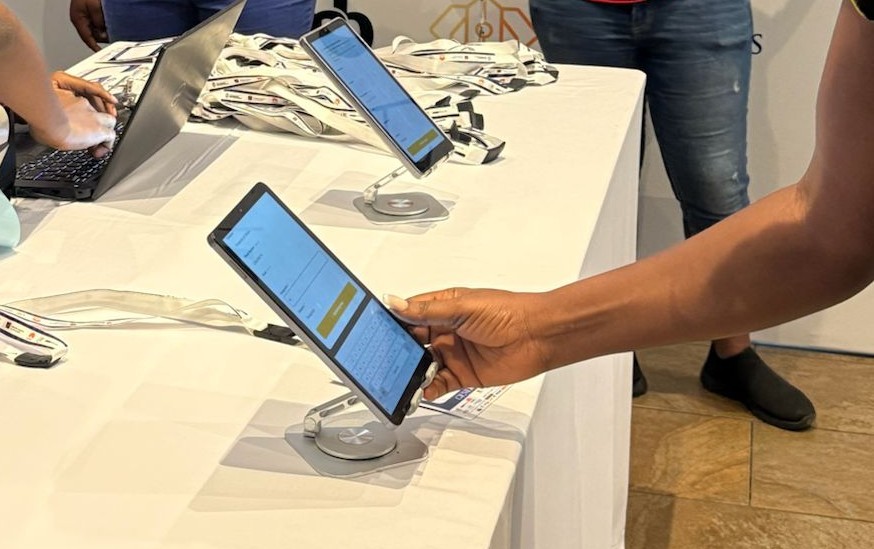
Fast Event Entry can make a major difference in how attendees experience an event from the moment they arrive. Whether you are organizing a conference in Accra, an exhibition in Kumasi, a corporate event, a church program, a festival, or a concert, the registration desk is often the first real interaction guests have with your event team.
If attendees arrive to find long queues, slow verification, handwritten name tags, missing registration records, or confused registration staff, frustration can start before the event has even begun.
On the other hand, a smooth entry process creates a positive first impression. Attendees can be verified quickly, receive their badges, and get into the venue without unnecessary delays.
That is where a well-organized onsite registration process becomes essential.
With the right technology and registration support, event organizers can move from a crowded registration desk to a professional arrival experience built around speed, accuracy, and better attendee visibility.
Why Fast Event Entry Matters
Event attendees expect convenience. They have already registered, purchased tickets, or received invitations. When they arrive at the venue, they expect the process of getting inside to be straightforward.
A slow registration process can create several problems:
- Long queues at the entrance
- Frustrated attendees
- Registration errors
- Duplicate or missing records
- Slow manual verification
- Handwritten or poorly printed tags
- Confusion among registration staff
- Difficulty managing walk-in guests
- Limited visibility into attendance numbers
These issues become even more noticeable when hundreds or thousands of people arrive within a short period. For example, imagine a conference in Accra where 500 attendees arrive within 30 minutes. If every guest has to be manually searched for on a spreadsheet, verified by hand, and given a handwritten badge, even a small delay per person can quickly create a large queue. Fast Event Entry helps prevent this bottleneck by making the arrival process more organized and efficient.
Start with Better Check-In
One of the simplest ways to improve event entry is to reduce the amount of manual work required at the registration desk. Instead of asking staff to manually search through long guest lists, attendees can present a QR code or barcode that can be scanned and validated. The process becomes simple: Scan. Check-In. Done in Seconds.
A well-designed check-in process can help registration teams quickly confirm whether an attendee is registered and record their arrival. This reduces unnecessary conversations and manual searches while allowing staff to focus on helping guests who actually need assistance.
For busy events, this can make a significant difference.
1. Reduce Long Queues at the Registration Desk
Long queues are one of the most visible signs of an inefficient registration process. When several attendees are waiting while one member of staff searches for names manually, the queue grows quickly. Guests may become impatient, while registration staff become increasingly pressured.
Fast Event Entry addresses this problem by making attendee verification quicker.
Organizers can create dedicated processes for:
- Pre-registered attendees
- VIP guests
- Walk-in attendees
- Speakers
- Exhibitors
- Staff and event crew
With the right setup, different attendee categories can be handled efficiently instead of forcing everyone through the same manual process.
The result is a smoother flow of people from the entrance to the event venue.
2. Use QR Codes to Speed Up Attendee Verification
QR codes have become a practical way to simplify event check-in.
Instead of manually searching for a guest’s name, registration details can be accessed by scanning the attendee’s QR code.
This is especially useful for conferences, corporate events, exhibitions and ticketed entertainment events where organizers need to process many people within a short period.
A QR-based process can help:
- Confirm attendee registration
- Reduce manual data entry
- Minimize errors
- Record check-in times
- Improve entry speed
- Give registration teams better visibility
For attendees, the experience is simple: present the code, scan it, and proceed.
That simplicity is exactly what a good event entry process should provide.
3. Replace Handwritten Tags with Professional Name Badges
Registration does not end when an attendee is checked in. At many events, attendees also need a name badge or event tag. Handwritten tags can make an event look less organized and can create problems when names are difficult to read or spelled incorrectly. Professional onsite badge printing provides a better alternative.
Instead of preparing every name tag days in advance, organizers can print badges at the registration desk as attendees arrive.
The process can be designed around:
Clean, Branded Name Tags in 12 Seconds.
Professionally printed badges can include information such as:
- Attendee name
- Company or organization
- Job title
- Attendee category
- Event branding
- QR code
- Access information
Beyond appearance, clearly printed badges make networking easier and help staff identify different attendee categories.
4. Make Walk-In Registration Easier
Not every attendee will register in advance. At conferences, church events, exhibitions and public events, people may arrive and decide to register at the venue. If walk-in registration is handled entirely manually, it can quickly become a source of confusion.
Staff may have to collect personal information, check payment status, create a record, prepare a badge and explain where the attendee should go.
A structured onsite registration process makes this easier. Walk-in attendees can be registered separately while pre-registered guests continue through the faster check-in process. This prevents a few complicated registrations from slowing down everyone else.
5. Prepare for Unreliable Internet Connections
Internet connectivity is another consideration for event organizers in Ghana. Not every event venue has the same level of connectivity. Outdoor events, temporary venues, large halls and crowded locations can sometimes present connectivity challenges. An event registration system that supports offline and online check-in gives organizers greater flexibility.
Instead of allowing an internet issue to bring registration to a standstill, registration teams can continue processing attendees and synchronize information when connectivity is restored. This provides greater operational confidence, particularly for large events where every minute at the entrance matters.
6. Give Organizers Real-Time Attendance Visibility
Fast Event Entry is not only about getting people through the door. It is also about giving organizers better information about what is happening at the event. Traditional paper-based registration can make it difficult to answer simple questions such as:
- How many people have checked in?
- How many registered attendees have not arrived?
- How many walk-ins have registered?
- How quickly are attendees entering?
- How many people are attending a particular session?
Real-time attendee tracking can provide answers while the event is still happening. This means organizers can make decisions based on current information rather than waiting until the event is over.
Real-Time Numbers You Can Actually Use.
For example, if organizers see that attendance at a particular session is increasing rapidly, they can adjust seating, staffing or room arrangements accordingly.
7. Reduce Pressure on Registration Staff
A registration desk can become stressful when staff members are expected to solve every problem manually. One person may be searching for an attendee. Another may be handling a walk-in registration. Someone else may be trying to print a badge while another attendee asks about their session. Without a clear system, the registration area can quickly become chaotic. A structured onsite registration process gives every team member a defined role.
Staff can focus on:
- Scanning attendees
- Printing badges
- Managing walk-ins
- Assisting guests
- Resolving registration issues
- Directing attendees to the correct location
Professional registration support can further reduce the workload on the event organizer’s internal team.
Instead of worrying about every detail at the entrance, organizers can focus on the wider event experience.
8. It Creates a Better First Impression
An attendee’s experience begins before the keynote speech, concert performance or networking session. It begins when they arrive. A well-managed entrance communicates that the event is organized and that the organizers value their guests’ time.
Compare two experiences.
Experience A: An attendee arrives, waits in a long queue, searches for their name on a paper list, discovers their information is difficult to locate, waits again for a handwritten tag, and finally enters the venue.
Experience B: An attendee arrives, presents their QR code, gets scanned, receives a professionally printed badge and enters the venue within minutes.
The difference is significant. Fast Event Entry creates a smoother beginning and sets the tone for everything that follows.
9. Improve the Quality of Your Attendee Data
Good registration is also about good data. When attendee information is collected manually, mistakes can happen. Names may be misspelled, phone numbers may be entered incorrectly, and duplicate records may be created.
Digital registration and onsite check-in can help improve data quality by connecting registration information with the check-in process.
This gives organizers a cleaner record of:
- Who registered
- Who attended
- When attendees arrived
- Attendee categories
- Walk-in registrations
- Session attendance
Better data can also support post-event reporting, follow-up communication and future event planning.
10. Connect Ticketing and Onsite Registration
For ticketed events, the attendee journey should not stop when a ticket is purchased. The information collected during ticket sales can become part of the onsite registration experience. When ticketing and onsite registration work together, organizers can move more efficiently from: Ticket Purchase → Registration → QR Validation → Check-In → Badge Printing → Attendance Tracking
This reduces unnecessary duplication of information and gives event teams a clearer view of the attendee journey.
For organizers using event ticketing alongside onsite registration, an integrated approach can make event-day operations much easier.
How Ayalogbook Supports Fast Event Entry
Ayalogbook is built to help event organizers manage the onsite attendee experience from registration to entry.
Its onsite event registration and tag management capabilities combine technology with professional registration support to help organizations deliver a more efficient front-desk experience.
Ayalogbook supports:
- QR code and barcode attendee validation
- Onsite badge and name tag printing
- Walk-in registration management
- Online and offline check-in
- Real-time attendee tracking
- Session attendance monitoring
- Guest data collection
- Registration desk staffing
- Registration Manager services
- Live reporting and attendee insights
The goal is not simply to add more technology to the registration desk.
The goal is to make event entry easier for attendees and less stressful for organizers.
Fast, Professional On-Site Registration for Ghanaian Events
Different events have different registration requirements. A corporate conference may need branded badges and session tracking. An exhibition may need to distinguish exhibitors, visitors and sponsors. A church programme may need fast processing for large groups of attendees. A concert may need rapid ticket validation at multiple entry points. An NGO event may need accurate attendee information for reporting and follow-up. Ayalogbook can support these different requirements while keeping the central goal the same: Fast, Professional On-Site Registration.
What Event Organizers Gain
When registration works properly, the benefits go beyond the entrance.
Organizers can gain:
Faster attendee movement
Guests spend less time standing in queues and more time participating in the event.
Reduced operational stress
Registration teams have a clearer process and better tools for handling attendees.
Better data quality
Digital registration and validation reduce reliance on handwritten records.
A more professional event
Branded badges, organized registration desks and efficient check-in create a stronger impression.
Better attendee experiences
Guests appreciate an event that respects their time and makes arrival simple.
Actionable event insights
Real-time attendance data can help organizers make better operational decisions during the event and improve planning for future events.
How to Plan for Fast Event Entry
Technology is important, but preparation also matters.
Before your next event, consider these practical steps:
- Estimate your busiest arrival period.
Determine how many attendees are likely to arrive within the first 30–60 minutes. - Create separate registration flows.
Consider separate processes for pre-registered guests, VIPs, walk-ins, speakers and exhibitors. - Prepare your attendee data early.
Make sure registration information is accurate before event day. - Test QR codes and scanning equipment.
Avoid discovering technical issues when guests are already waiting. - Prepare for connectivity challenges.
Have an offline registration or check-in process where necessary. - Train registration staff.
Every team member should understand their role before attendees arrive. - Plan your badge printing process.
Make sure equipment, materials and designs are ready. - Monitor attendance in real time.
Use live information to understand how quickly guests are arriving. - Review the data after the event.
Identify bottlenecks and use attendance insights to improve the next event.
Conclusion
Fast Event Entry is more than simply moving people through a doorway quickly. It is about creating an organized, professional and stress-free arrival experience.
For Ghanaian event organizers, problems such as long queues, manual registration errors, handwritten tags, unreliable connectivity and limited attendee visibility can have a major impact on event-day operations.
A well-designed onsite registration process addresses these challenges by combining efficient check-in, QR scanning, professional badge printing, walk-in management, real-time reporting and reliable registration support.
With Ayalogbook, organizers can create a smoother journey from the registration desk to the event floor while gaining better visibility into their attendees.
When guests can arrive, scan, check in, receive their tags and move into the event without unnecessary delays, everyone benefits.
Scan. Check-In. Done in Seconds.
Ready to improve the arrival experience at your next event in Ghana? Explore Ayalogbook‘s onsite registration and event tag management solutions and make every second at your registration desk count.